

If your bedroom wall art never looks quite right, you’re not alone. Many people hang art above the bed and still feel something is off—too small, too high, or just not balanced.
In this article, I’ll show you the 22 bedroom wall art mistakes most people make and exactly how to avoid them using easy, real-life tips. No hard words, no design rules to memorize.
You’ll learn where to place wall art, what size works best, and when it’s okay to skip art completely—so your bedroom finally feels calm, clean, and put together.
Bedroom Wall Art Mistakes And Avoid
Mistake 1: Hanging Wall Art That Is Too Small Above the Bed

This is one of the most common bedroom wall art mistakes. When the art is too small, it looks lost and weak on the wall. The bed feels heavy, but the art feels tiny, and the whole space looks unbalanced.
Many people choose small art because they are afraid of going too big. But small art above a bed often makes the room feel unfinished.
How to avoid it:
Pick wall art that is about two-thirds the width of your bed. This size feels strong, balanced, and planned. If you love smaller art, use two or three pieces together so they don’t look lonely on the wall.
Mistake 2: Choosing Wall Art That Is Too Large

Going too big can be just as bad as going too small. Oversized wall art can make your bedroom feel crowded and heavy, especially in small rooms.
When art takes over the whole wall, the bed no longer feels like the main focus. Instead, the room starts to feel tight and uncomfortable.
How to avoid it:
Always leave some empty wall space around your art. Your wall needs breathing room. If your bedroom is small, choose medium-sized art instead of one huge piece.
Mistake 3: Ignoring Bed Size When Picking Wall Art

A lot of people pick wall art because they like the design, not because it fits the bed. This often leads to art that feels “off,” even if the art itself is beautiful.
A king bed, queen bed, and twin bed all need different art sizes. One size does not fit all.
How to avoid it:
Match your wall art size to your bed size. Bigger beds need wider art. Smaller beds look better with smaller or lighter designs. When art and bed match, the bedroom feels calm and balanced.
Mistake 4: Not Following the Two-Thirds Width Rule

This rule sounds fancy, but it’s actually very simple. When wall art is too narrow or too wide, the bedroom looks awkward.
Many bedroom wall decor problems happen because people guess instead of using this easy rule.
How to avoid it:
Your wall art should be about two-thirds the width of the bed. This rule works for single art, triptychs, and even gallery walls. It keeps everything looking neat without trying too hard.
Mistake 5: Hanging Wall Art Too High Above the Headboard
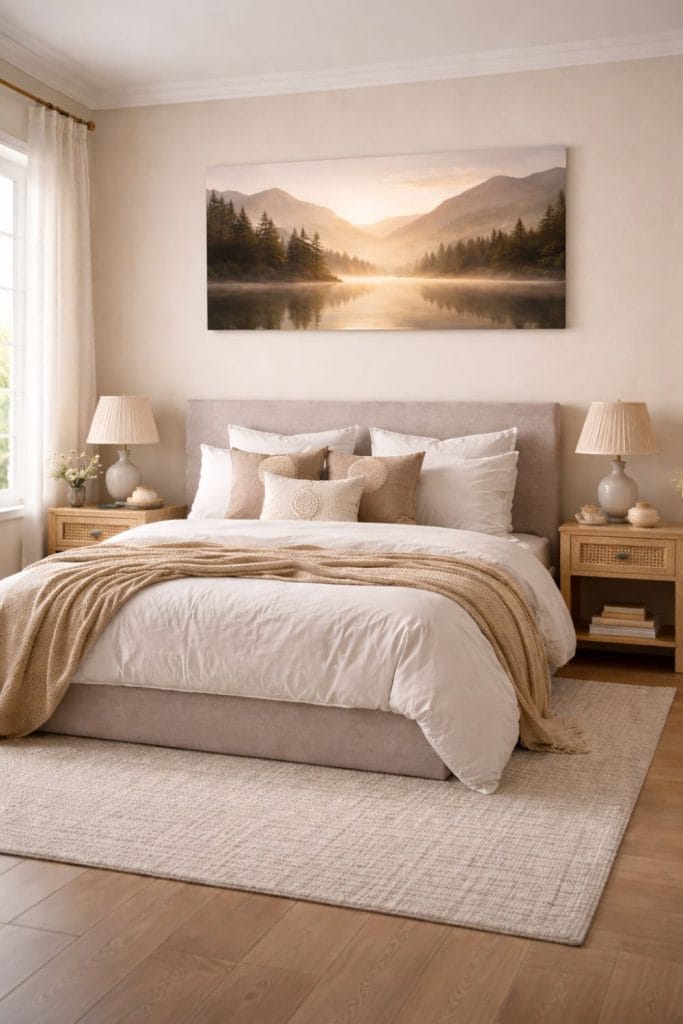
When wall art is placed too high, it looks like it’s floating on the wall. The bed and art no longer feel connected, and the room loses its cozy feeling.
This mistake happens a lot in bedrooms with high ceilings.
How to avoid it:
Hang wall art 6 to 12 inches above the headboard. This keeps the art close enough to the bed so everything feels like one complete design.
Mistake 6: Hanging Wall Art Too Low Over the Bed
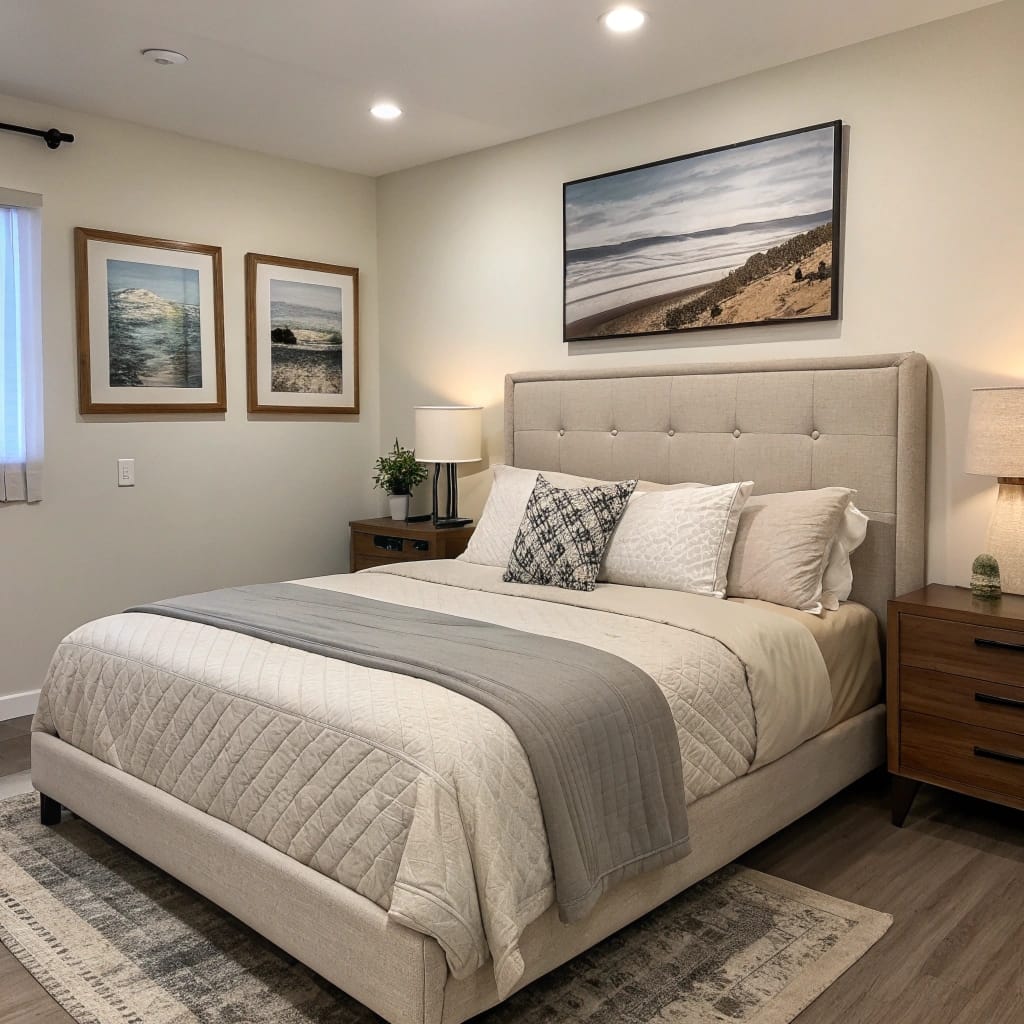
Placing art too close to the headboard can feel cramped. It can make the room look cluttered and even block the natural flow of your bedroom.
How to avoid it:
Leave enough space between the headboard and the bottom of your wall art—around 6 to 12 inches is perfect. This keeps your bedroom airy and cozy.
Mistake 7: Lining Up Art with Window Tops

Some people try to match the top of the artwork with the top of their windows. This can create a floating or disconnected look, making the room feel off-balance.
How to avoid it:
Center your wall art with the bed, not the window. The bed is the main anchor of your room, so everything above it should feel connected.
Mistake 8: Ignoring Ceiling Height

Ceiling height affects how your art should look. Tall ceilings can make art seem small if it’s placed too low, while low ceilings can make tall art feel overpowering.
How to avoid it:
Match the shape and size of your art with your ceiling height. Wider pieces work better for low ceilings, and taller or multi-piece arrangements suit higher ceilings.
Mistake 9: Forgetting Room Symmetry
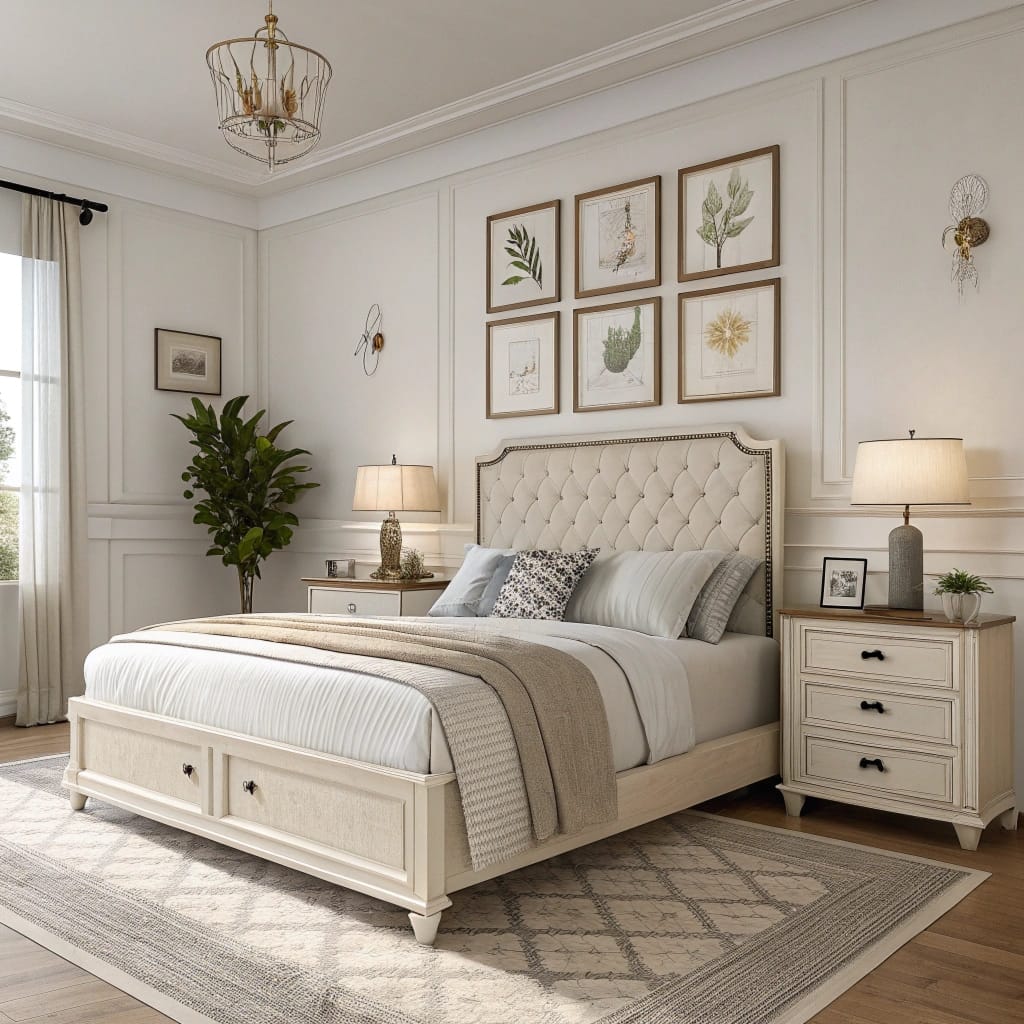
Ignoring symmetry is a common mistake, especially in bedrooms with two nightstands or multiple windows. Asymmetry can make your room feel awkward or unfinished.
How to avoid it:
Balance wall art with your furniture and bedroom layout. If you have a twin bedroom or two windows, center a piece or use a neat triptych to keep everything even.
Mistake 10: Poor Art Placement Between Windows
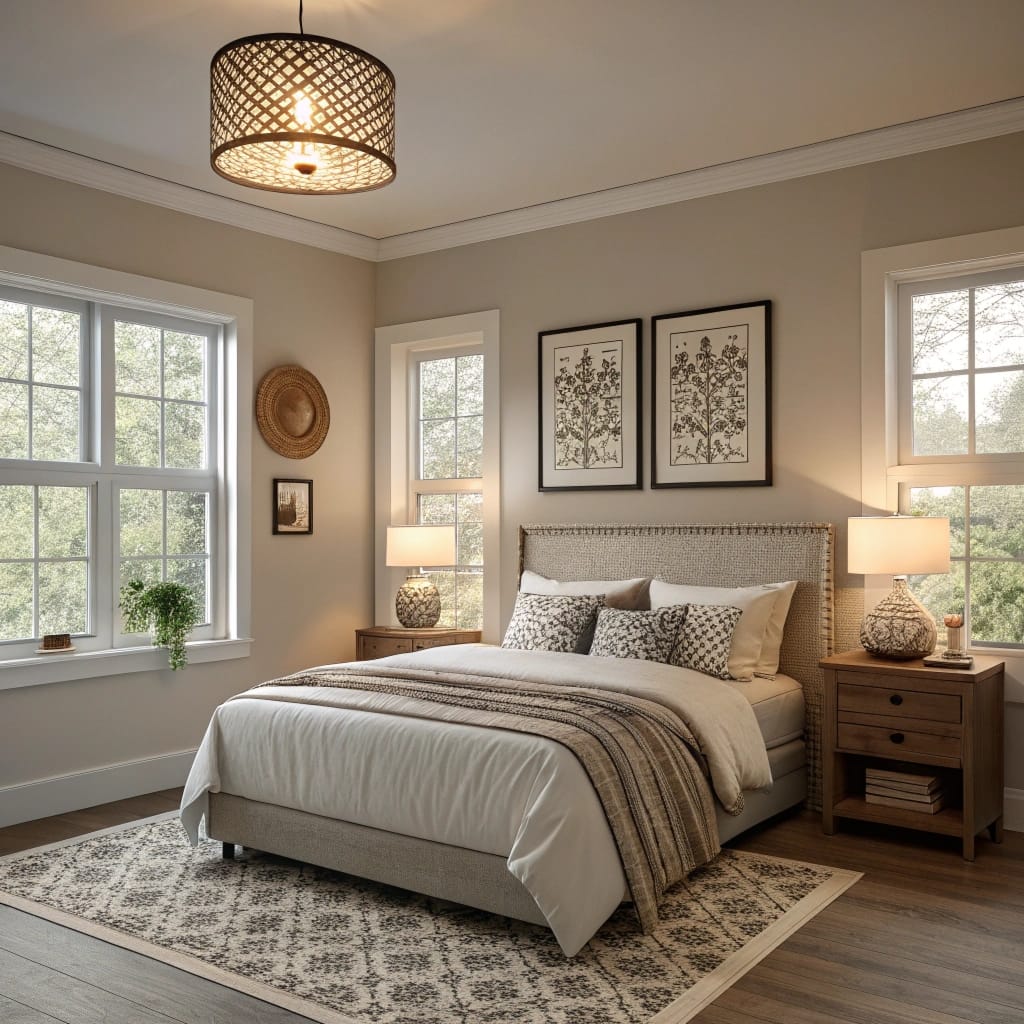
Placing art randomly between windows often leads to a lopsided look. The wall can feel cluttered on one side and empty on the other.
How to avoid it:
Measure the wall and place your art centered between the windows. Or consider a single, large piece or a set of smaller pieces arranged evenly. Balance is key.
Mistake 11: Ignoring Nightstand Size

Large wall art with tiny nightstands can feel unbalanced. The art dominates, and the furniture looks lost. This small mismatch can make your room feel off, even if everything else is pretty.
How to avoid it:
Choose wall art that matches the scale of your nightstands and bed. Everything should feel like it belongs together.
Mistake 12: Overcrowding the Wall Above the Bed
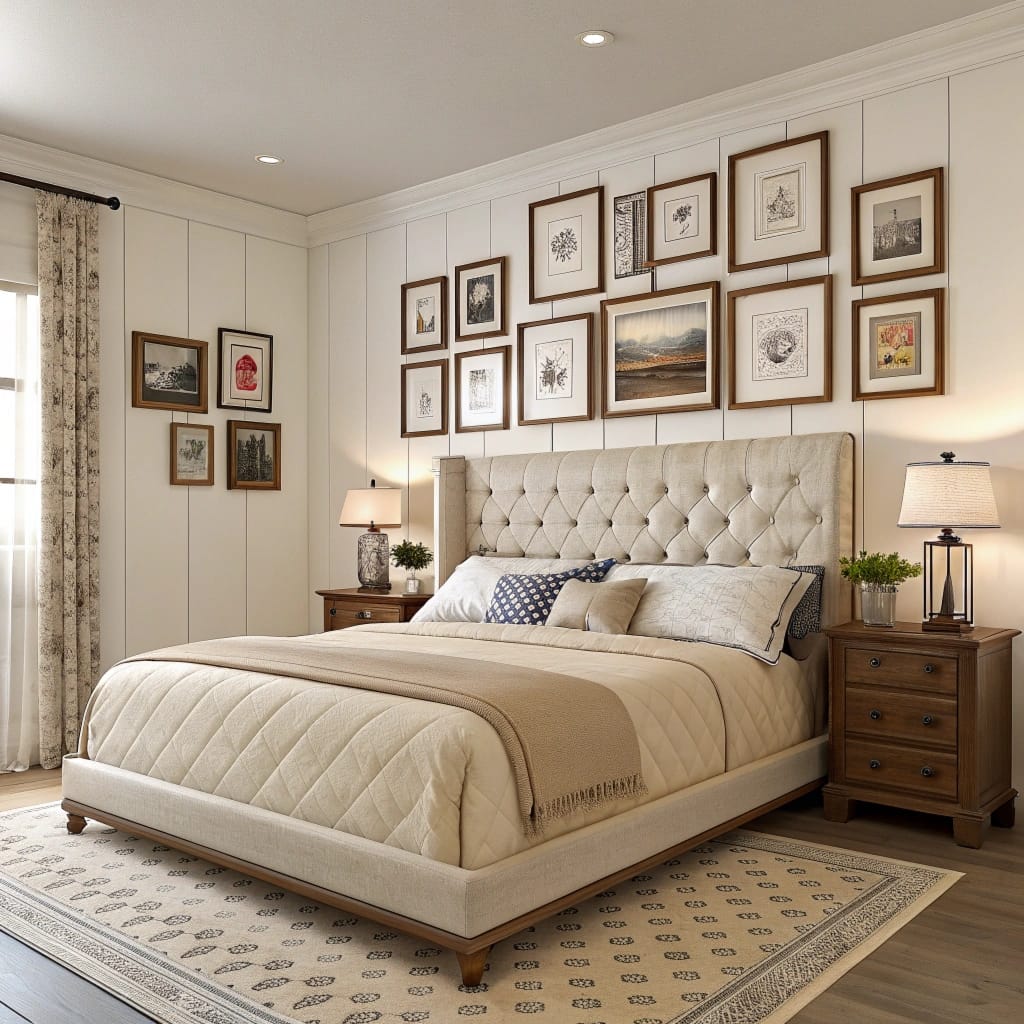
Too many frames or decorations can make the wall look messy. It distracts from the bed and makes the space feel stressful instead of relaxing.
How to avoid it:
Keep it simple. Use one or two main pieces, or a small, well-planned gallery. Empty space is your friend—it gives the room a calm, open feel.
Mistake 13: Choosing Art That Doesn’t Match Bedroom Style

Modern art in a rustic bedroom? Or bright abstract pieces in a soft, cozy room? Art that doesn’t match your bedroom’s style creates a confusing look.
How to avoid it:
Pick art that matches your room’s theme. Neutral, calm pieces work well for most bedrooms. If you love bold colors, keep them in small, intentional doses.
Mistake 14: Using Busy or Loud Artwork

Loud, busy, or highly detailed art can make a bedroom feel energetic—not cozy. Bedrooms are meant for rest, not overstimulation.
How to avoid it:
Choose calm colors and simple designs for the wall above your bed. Soft patterns or muted tones create a relaxing atmosphere.
Mistake 15: Mixing Too Many Frame Styles
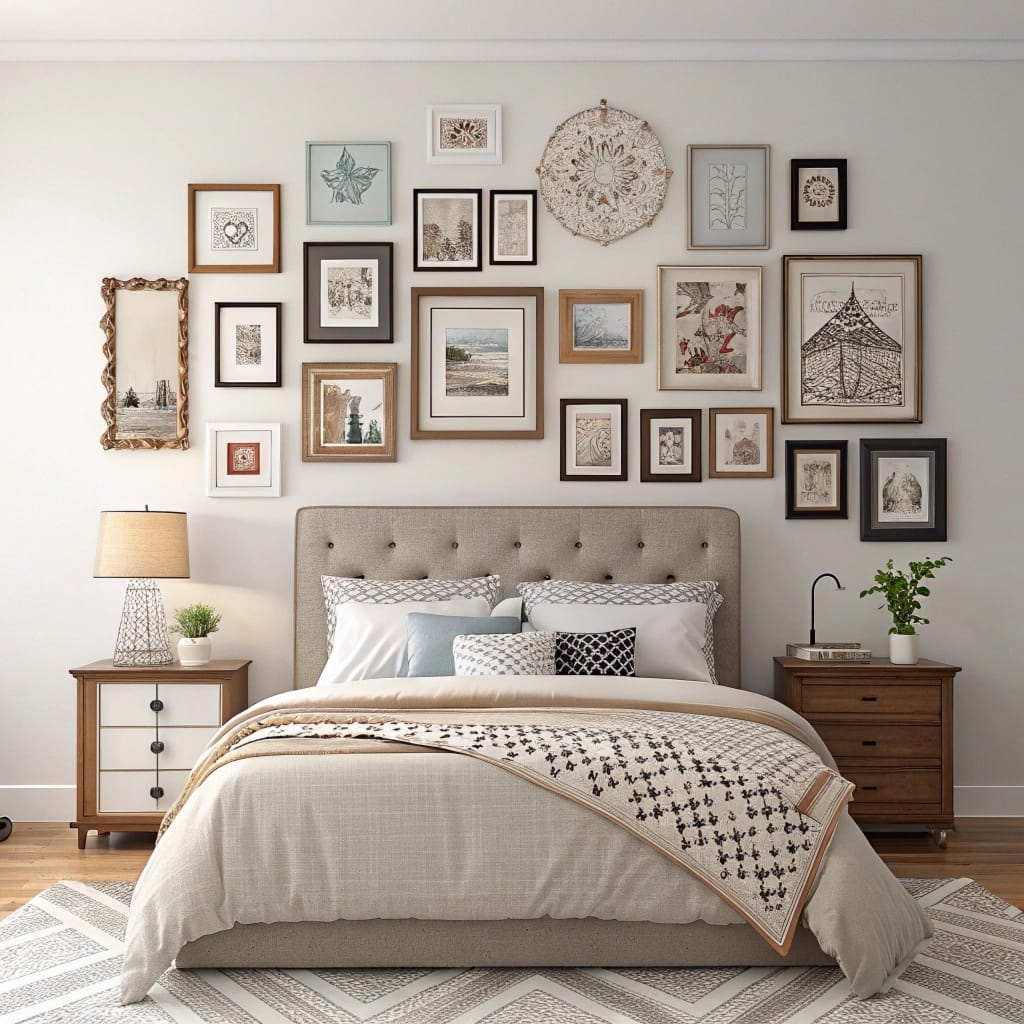
Too many different frame types, shapes, or colors can look messy. It distracts from the art itself and makes the bedroom feel chaotic.
How to avoid it:
Stick to one or two frame styles. Consistency keeps your wall art looking polished and intentional.
Mistake 16: Ignoring Color Harmony with Bedding & Walls

Even beautiful wall art can look wrong if the colors clash with your bedding or wall paint. This creates a jarring look and makes your bedroom feel less relaxing.
How to avoid it:
Pick art colors that complement your bedding and wall color. Soft tones or matching accent colors help the room feel calm and cozy.
Mistake 17: Poor Spacing in a Gallery Wall

Gallery walls are popular, but many people don’t measure the gaps properly. Uneven spacing can make a gallery wall look messy and unplanned.
How to avoid it:
Use a ruler or painter’s tape to plan the gaps evenly before hanging. Even spacing creates a polished and intentional look.
Mistake 18: Hanging Gallery Art Without a Layout Plan

Some people just start hanging frames and hope it looks good. Usually, it doesn’t. Random placement makes the wall feel cluttered.
How to avoid it:
Plan your gallery layout first—on paper or using painter’s tape on the wall. This makes sure everything fits perfectly before you commit.
Mistake 19: Using Uneven Frame Sizes Randomly
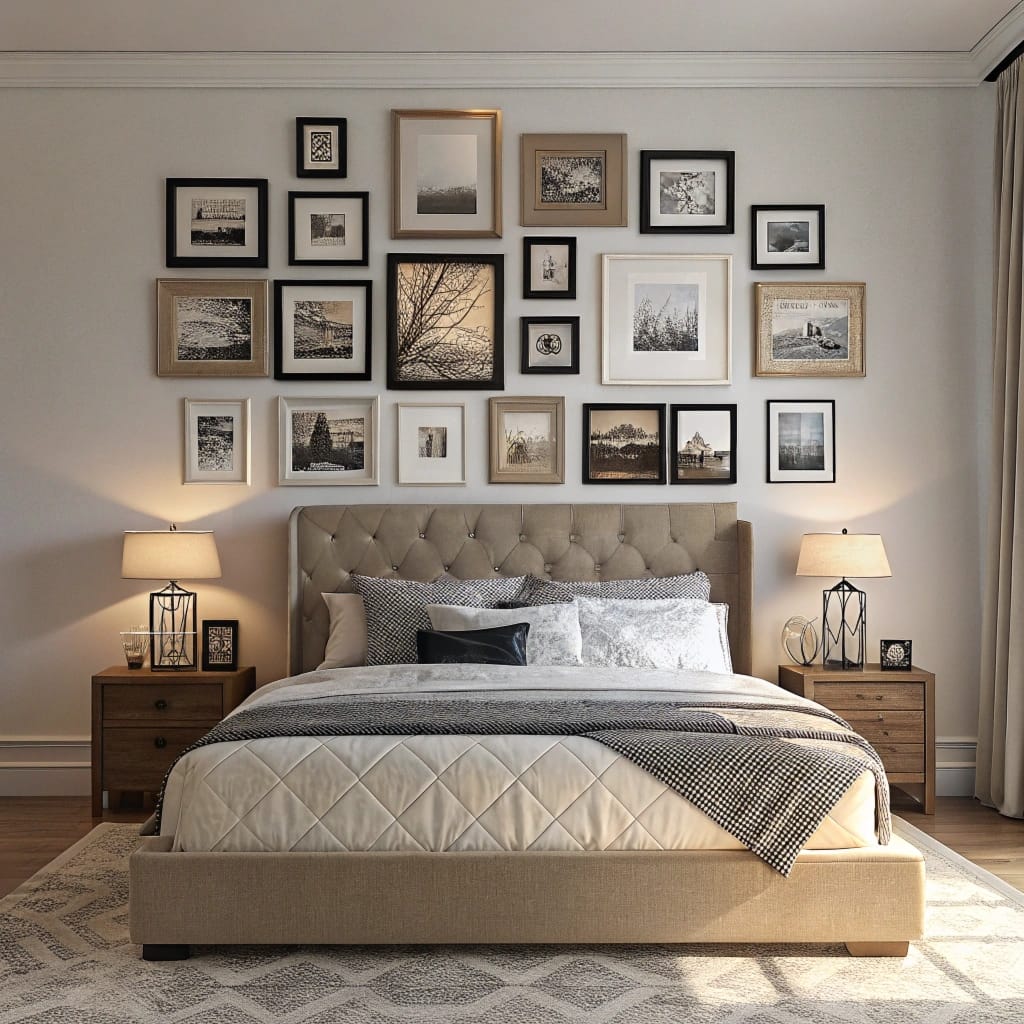
Mixing too many different sizes without order can make a wall chaotic. The eye doesn’t know where to focus, and the bedroom feels messy.
How to avoid it:
Use a clear pattern or grid for your frames. If you want variety, keep the shapes similar so it feels intentional, not random.
Mistake 20: Hanging Heavy Art Without Proper Hardware
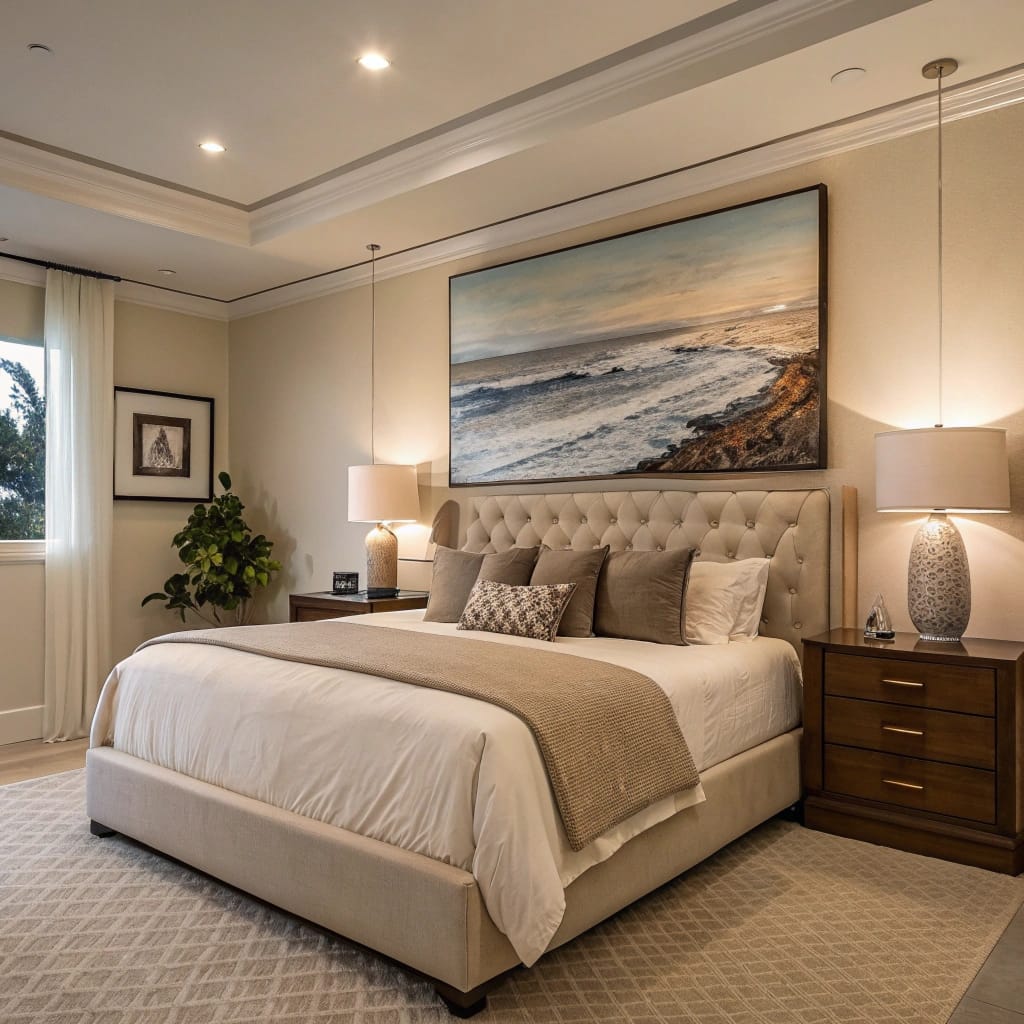
Heavy art above the bed can be dangerous if not mounted correctly. It’s not just an aesthetic mistake—it’s a safety hazard.
How to avoid it:
Always use strong hooks, wall anchors, or picture hanging hardware that can support the weight. Safety first, style second!
Mistake 21: Using Nails That Damage Walls or Fall Out

Many people hang art with the wrong nails or hooks, especially in rentals. This can leave holes or even cause frames to fall, making a mess and wasting money.
How to avoid it:
Use renter-friendly hanging tools, like adhesive hooks or wall anchors. Always check the weight limit before hanging.
Mistake 22: Hanging Art Above the Bed Without Safety Check
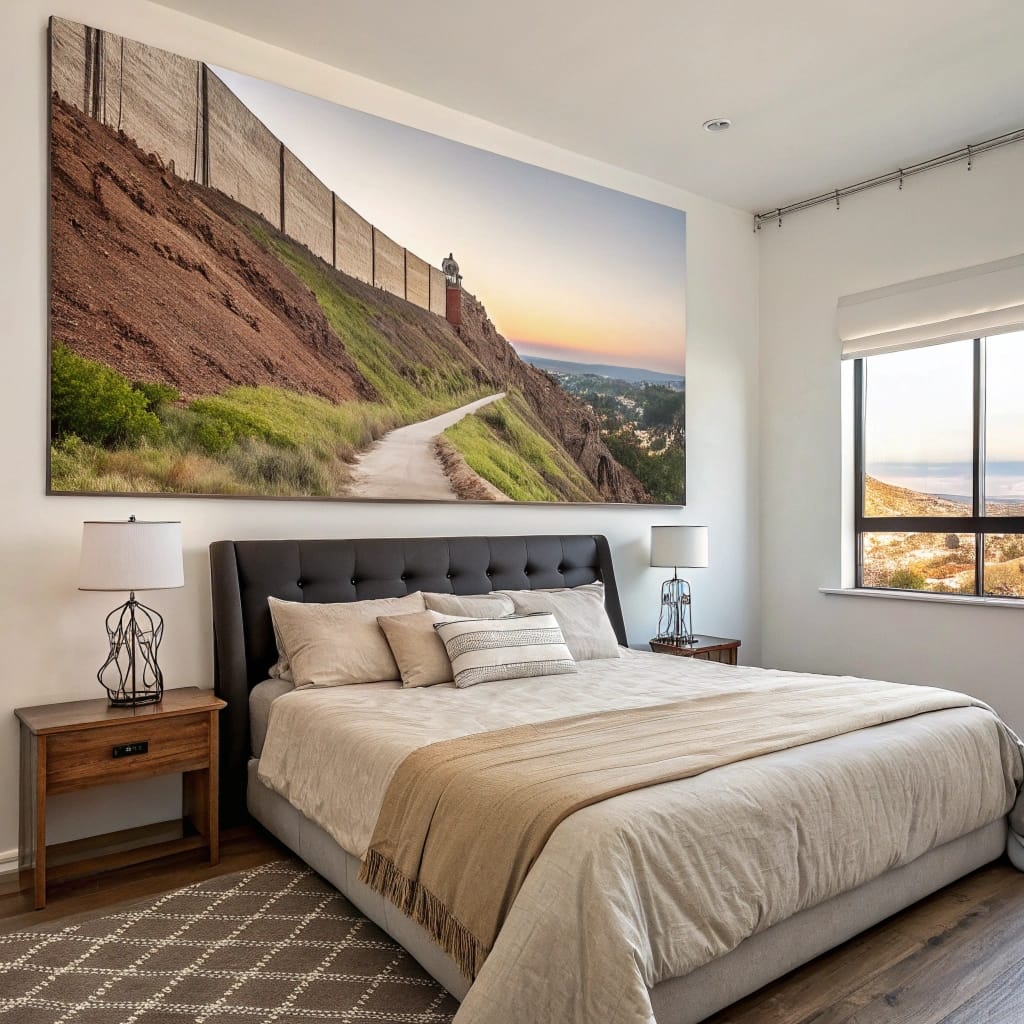
Heavy or poorly mounted art above your bed can fall during an accident or even if bumped slightly. This is not just ugly—it’s dangerous.
How to avoid it:
Double-check your mounting method. Make sure heavy pieces are secured properly. Safety is always more important than style.
When You Should Skip Wall Art Above the Bed
Believe it or not, you don’t always need wall art above your bed. Sometimes skipping it makes the room feel cleaner, calmer, and more intentional.
Here are the situations where skipping art actually works better:
Bold Wallpaper: If your wall already has a strong pattern or color, adding art might feel too busy. Let the wallpaper shine as the main focal point.
Statement Headboard: A headboard with unique design, texture, or color can act as art on its own. You don’t need to crowd the wall above it.
Very Small Bedroom: In small rooms, too much wall decor can make the space feel cramped. Skipping art keeps it airy and simple.
Low Ceiling Space: Hanging art too close to a low ceiling can make the room feel tight. Sometimes leaving the wall blank is the better choice.
Tip: Minimalism is powerful. A blank wall above the bed can actually make your room feel clean, balanced, and peaceful.
Quick Bedroom Wall Art Placement Checklist
Here’s a simple checklist to make sure your wall art looks perfect above your bed:
Correct Size for Bed: Art should be about two-thirds the width of your bed. Too small or too big will look off.
Proper Height Above Headboard: Leave around 6–12 inches between the top of the headboard and the bottom of the art.
Balanced with Furniture: Make sure your nightstands, lamps, and other furniture feel proportionate to the wall art.
Safe Mounting: Heavy art needs strong hooks or anchors. Safety first, style second.
Calm Colors: Choose colors that match your bedding and wall to create a relaxed, cozy vibe.
Pro Tip: Keep it simple and intentional. Following this checklist ensures your bedroom feels put together and inviting, even if you’re new to decorating.
Conclusion
Bedroom wall art can completely change the look and feel of your room—but small mistakes can make even the most beautiful art look off. From choosing the right size and height to balancing colors, furniture, and safety, every little detail matters.
The good news is that all these mistakes are easy to avoid. By following simple rules—like the 2/3 width rule, proper height, balanced placement, and safe mounting—you can make your bedroom feel cozy, calm, and stylish, even if you’re new to decorating.
Remember, less is often more, and a little planning goes a long way. Sometimes skipping wall art altogether or keeping it simple is the best choice. With these tips, you’ll know exactly what to hang, where to hang it, and how to avoid common mistakes.
Your bedroom deserves to feel like a peaceful retreat, and the right wall art can help make that happen—without stress or guesswork.
Frequently Asked Questions (FAQ)
Q1: How high should wall art be above a bed?
A: A good rule is to hang wall art 6 to 12 inches above the headboard. This keeps the art connected to the bed without feeling too high or too low.
Q2: What size wall art works best above a queen bed?
A: For a queen bed, wall art around 40–50 inches wide works perfectly. It creates balance without overwhelming the space.
Q3: Is it safe to hang wall art above the bed?
A: Yes, as long as you use strong hooks, wall anchors, or proper picture-hanging hardware. Safety is key, especially for heavy pieces.
Q4: Can I hang multiple small frames above the bed?
A: Absolutely! Just make sure to plan the layout and keep spacing even. Too many random frames can look messy, but a well-planned gallery can look stylish.
Q5: Do I need wall art above my bed at all?
A: Not always. Sometimes bold wallpaper, a statement headboard, or a clean blank wall can look better. Skipping wall art keeps the room calm and uncluttered.
Q6: How do I choose wall art that matches my bedroom style?
A: Look at your room’s colors, furniture, and overall vibe. Neutral or calm art works in most rooms, and if you love bold pieces, use them sparingly so the room stays cozy.
Q7: Can I use different frame styles for my gallery wall?
A: Yes, but try to stick to one or two frame styles. Mixing too many can feel chaotic. Consistency keeps the wall polished and intentional.